

Embed in mobile app
Introduction
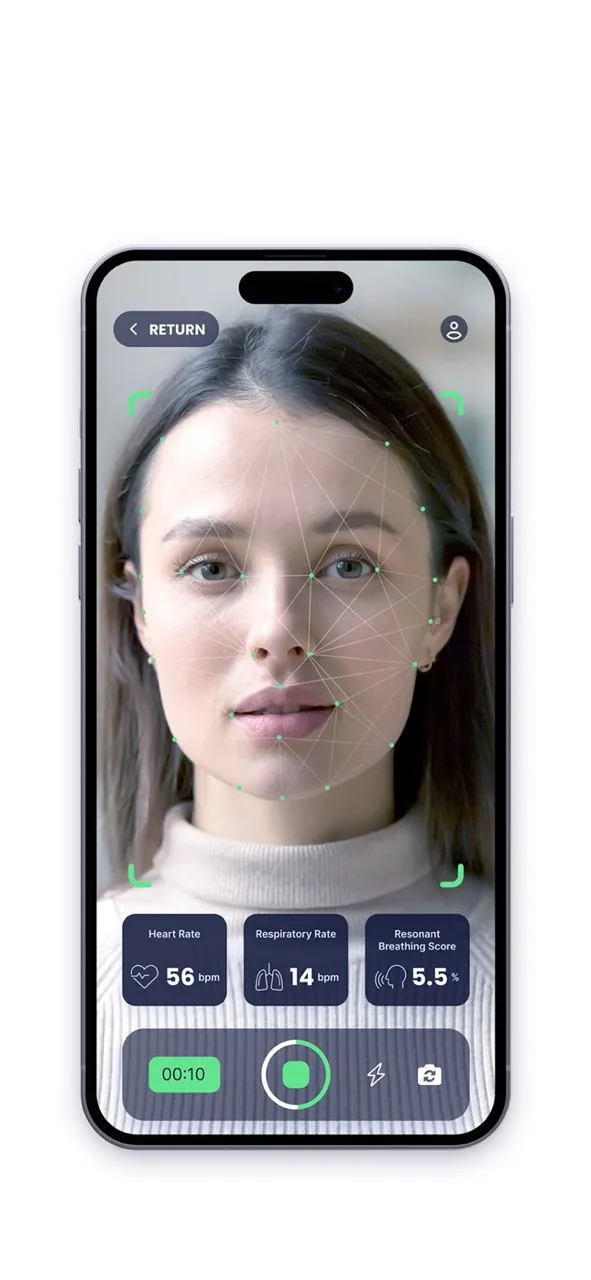
Section titled “Introduction”This section of the documentation explains how to embed IntelliProve’s Face Scan Plug-in as a native component in your mobile app. We provide SDK’s to handle the camera permissions, amongst others.
Embedding the Health dashboard plug-in can be done using a standard webview component and does not require any special SDK.
If you haven’t already, please head to our plug-in documentation first to learn more about the features and functionality of the plug-in solution.
Prerequisites
Section titled “Prerequisites”Make sure you’re able to request a plug-in URL, by following the explanation in our Plug-in URL page.
The Basic principle
Section titled “The Basic principle”Our platform utilizes the native iOS and Android WebView components for well-considered reasons. This approach ensures optimal performance and seamless integration within your app.
Native SDK Integration
To facilitate easy integration, we offer native SDKs for both iOS and Android platforms. These SDKs streamline the process of setting up the web view and managing outgoing messages (postMessages). Additionally, our SDKs handle the task of prompting users for camera permissions, ensuring a smooth user experience.
Plug-and-Play Functionality
Our solution is designed to be truly plug-and-play. With minimal setup requirements, only the web plug-in URL needs to be provided.
⚠️ Requirements
The minimum iOS SDK version: iOS 15.0
The minimum Android SDK version: 24
⚠️ Limitations
Inherent to using the native iOS/Android component, the web view is limited to be used as a full-screen component only.
Are you using React Native as your main framework?
Section titled “Are you using React Native as your main framework?”Are you using Flutter as your main framework?
Section titled “Are you using Flutter as your main framework?”Are you using Expo as your main framework?
Section titled “Are you using Expo as your main framework?”Are you creating a native iOS or Android app?
Section titled “Are you creating a native iOS or Android app?”Full-screen display on Android
Section titled “Full-screen display on Android”On Android 15 and newer, apps that target Android 15 (API level 35) or higher are drawn edge to edge: their content runs behind the status bar at the top and the navigation bar at the bottom. Apps that target Android 16 (API level 36) can no longer opt out of this on Android 16, and Google Play requires new apps and app updates to target API level 36. See Google’s Android 15 and Android 16 behavior changes.
What your users see: the Face Scan plug-in fills the whole screen, including the area behind the bars.
What you need to do: nothing, when you open the Face Scan URL with our SDK as the guides above describe, on devices with Android System WebView 144 or newer. The web view tells the plug-in how large the bars are, and the plug-in keeps its buttons and text clear of them.
Older WebView versions: Android SDK 1.1.3 and newer keep the plug-in clear of the bars on devices with an Android System WebView older than 144. The SDK places the plug-in between the bars and shows a dark strip behind them, so nothing is hidden. Cordova plug-in 1.2.2 and newer do the same.